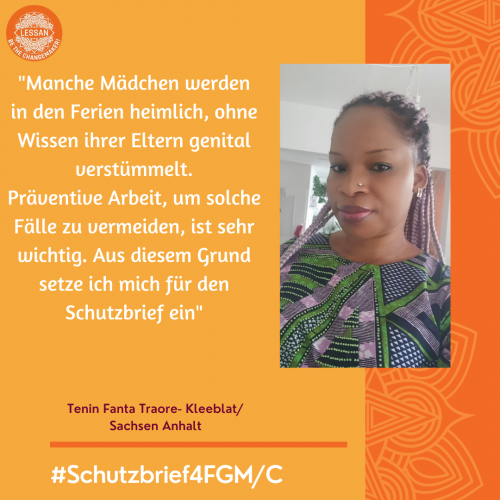
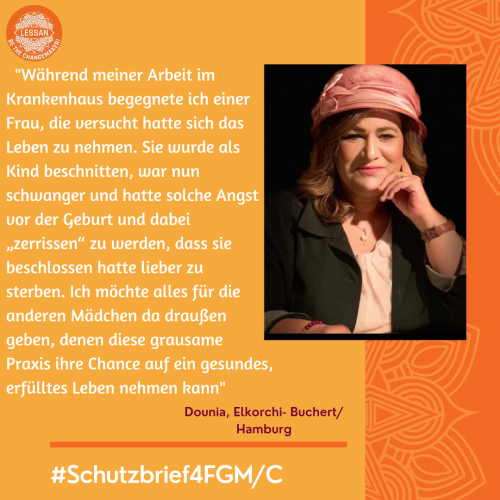
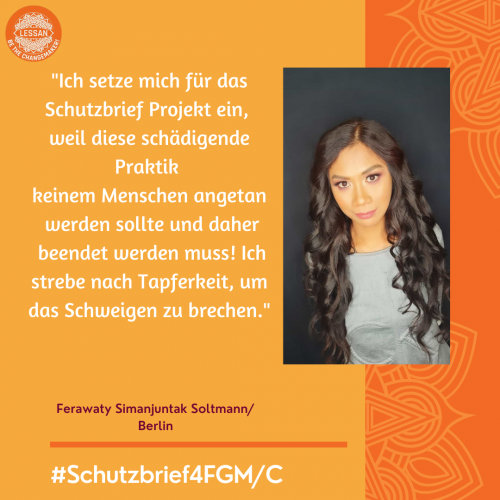
Worldwide, more than 200 million women and girls live with the consequences of female genital mutilation/cutting (FGM/C). In Europe, 600,000 women and girls are affected. Figures collected this summer by the Federal Ministry for Family Affairs, Senior Citizens, Women and Youth show: In Germany, more than 67,000 women are affected by female genital mutilation. Up to 14,752 girls are at risk. [1]
In Germany and Europe, female genital mutilation is a criminal offense. Under German criminal law, perpetrators who commit female genital mutilation abroad are also subject to prosecution. Many parents travel to their home countries during vacation periods to have girls and women undergo genital cutting there—often under social or family pressure from the country of origin. Women who have already been subjected to genital mutilation sometimes experience a second genital mutilation (re-excision).
Many women and girls die from female genital mutilation, especially when it is performed under precarious conditions in countries of origin.
The protection is intended for girls and women at risk of female genital mutilation (re-excision).
The addressees of the protection letter also include their families from Germany—and in the respective country of origin as well as the general population.
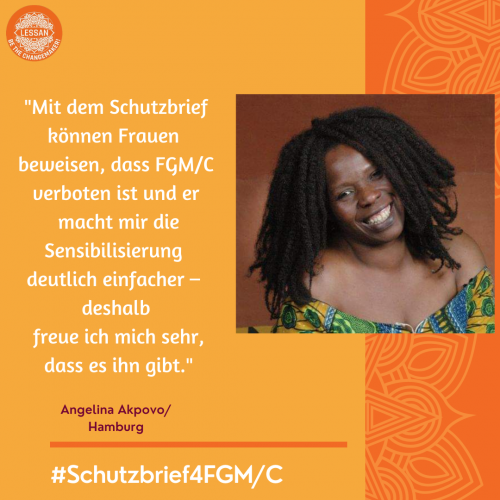
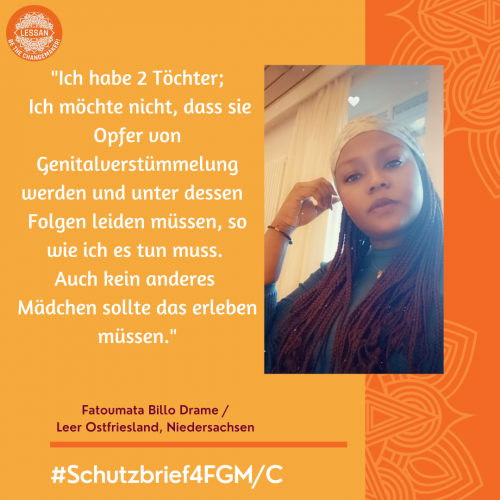
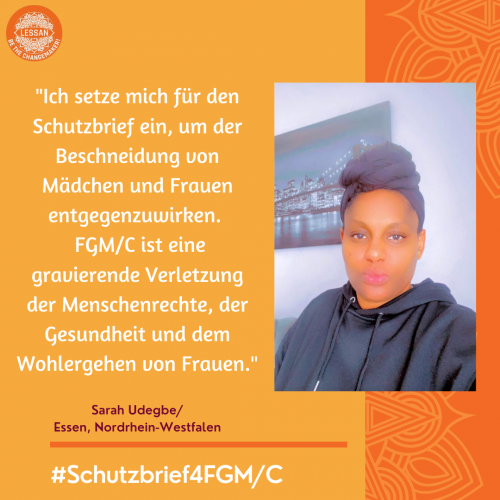
With the help of the protection letter, they can draw attention to the fact that female genital mutilation/cutting violates German and international law and can be punished with imprisonment or removal of children. The protection letter also highlights possible immigration law consequences of the offense. FGM/C has been prohibited in Germany since 2013, even if the procedure is performed abroad. With this document, parents can reinforce their arguments and thus protect their daughters from genital mutilation/cutting.
The protection letter can be used as an awareness-raising tool to break the taboo surrounding FGM/C without stigmatizing